Capturing the Triangulum Galaxy: M33 with the FRA400 and ASI2600MC Pro
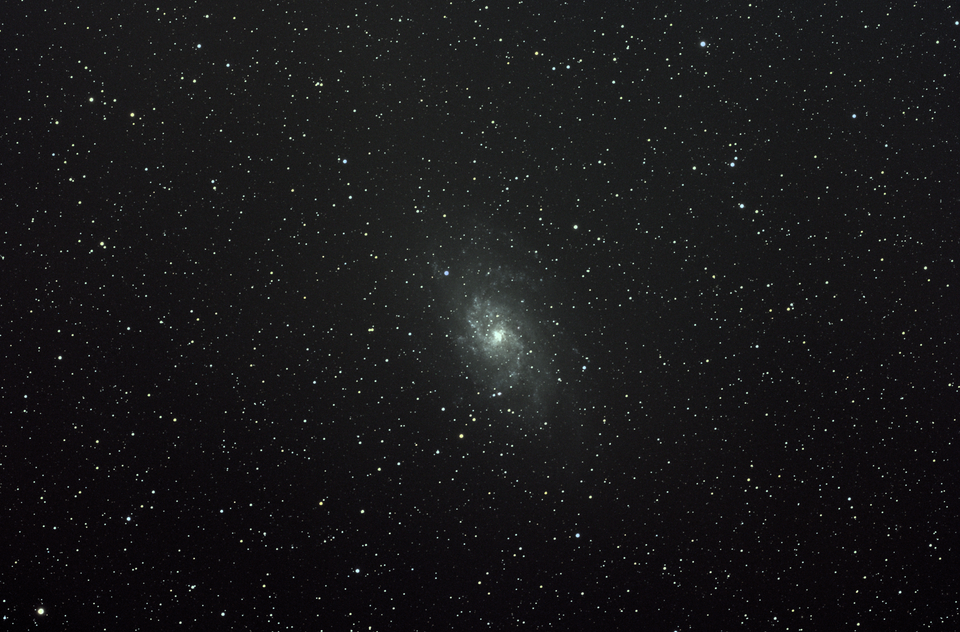
The Triangulum Galaxy, also known as Messier 33, is one of those targets that seems deceptively simple at first glance. It's the third-largest member of our Local Group, spanning nearly four times the angular diameter of a full moon across the night sky. But that size is exactly what makes it challenging—its light is spread thin, and capturing the faint spiral arms requires patience, good skies, and the right equipment.
The Setup
For this session, I paired my Askar FRA400 with the ZWO ASI2600MC Pro. The FRA400's 400mm focal length at f/4.6 delivers a wide, flat field that's nearly ideal for extended objects like M33. With the 2600MC's APS-C sensor and 3.76µm pixels, I'm working at about 1.94 arcseconds per pixel—forgiving enough for guiding tolerances while still resolving the galaxy's HII regions and spiral structure.
The ASI2600MC Pro continues to impress. Zero amp glow, low read noise, and that 26-megapixel Sony IMX571 sensor make it a workhorse for one-shot color imaging.
The Target
M33 sits roughly 2.7 million light-years away in the constellation Triangulum, making it one of the most distant objects visible to the naked eye under pristine conditions. Unlike its showier neighbor Andromeda, the Triangulum Galaxy presents itself nearly face-on, revealing intricate spiral arms peppered with star-forming regions. The most prominent of these is NGC 604—a massive HII region that dwarfs anything in our own Milky Way.
What I find fascinating about M33 is how it rewards longer integration times. The outer spiral arms are incredibly faint, and each additional hour of data seems to pull more structure out of the noise.
Lessons Learned
Wide-field refractors like the FRA400 are forgiving, but they still demand attention to spacing and tilt. Getting the backfocus dialed in correctly made a noticeable difference in star shapes across the frame. The quad-element design with its integrated field flattener handles coma well, but you still need precise spacing to the sensor.
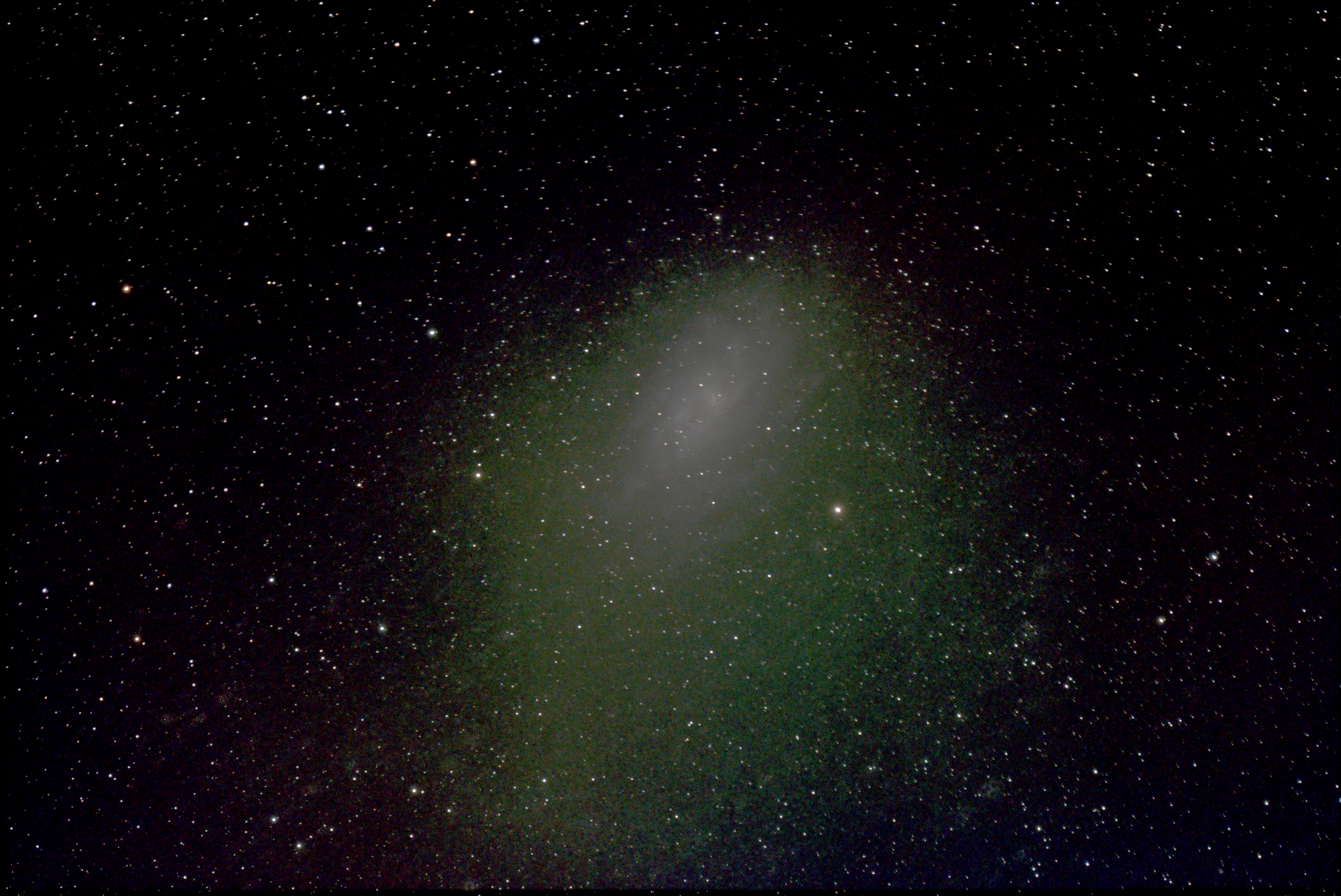
Processing M33 is an exercise in restraint. It's tempting to push the saturation on those red HII regions, but the galaxy's subtle blue spiral arms can easily get lost if you're not careful with color balance.
Here is one one such example I shot the night before.
Final Thoughts
M33 is one of those targets I keep coming back to. Each imaging session reveals something new—whether it's a faint outer arm I hadn't noticed before or better-resolved detail in the core. It's a reminder that even familiar objects in our cosmic neighborhood still have secrets to share.
Clear skies.